The full English translation supplied by the author is followed by the original Chinese manuscript. An independent, unpublished work on systematic mathematics teaching and learning.
HERONG BAI · HERONGBAI.COM
Breaking Down the Barriers Between School Stages and Building a Growing Cognitive Structure: On the Importance of Systematic "Teaching" and "Learning" in Elementary Mathematics
Abstract: Taking the perspective of a secondary school student, this paper analyzes in depth the structural flaws in current grade 1–12 elementary mathematics education in China: fragmented knowledge, stage-bound concepts, and terminology barriers. These flaws lead to long learning cycles and low efficiency, trapping students in a vicious cycle of "learn, forget, relearn." Traditional modular, point-by-point teaching leaves students with loosely organized cognitive structures, making it difficult for them to develop transferable mathematical thinking. Drawing on constructivism and cognitive load theory, this paper proposes a systematic solution centered on "forward-looking concept construction." Its central argument is that mathematics teaching should start from top-level design: when a concept is first constructed, "interfaces" should already be built in for its long-term development. Guided by the principles of "one name for life" and "conceptual analogy," teaching should establish non-arbitrary, substantive connections between new and old knowledge and build a cognitive system that can grow naturally and is "backward compatible." The aim is to free students from rote memorization and endless drilling and, by reducing cognitive load and promoting knowledge transfer, ultimately to achieve deep learning and an all-around improvement in mathematical thinking and literacy.
Keywords: elementary mathematics; systematic learning; forward-looking construction; terminology barriers; concept teaching; backward compatibility
I. Introduction
The core dilemma currently facing the "teaching" and "learning" of mathematics in primary and secondary schools is that students' enormous investment of time is badly out of proportion to the thinking ability they ultimately gain. Numerous studies indicate that the underlying cause lies in structural design flaws in the teaching system, and not in any lack of intelligence or effort on the part of students (Shi Ningzhong, 2018) [1]. Students easily fall into a high-intensity, low-efficiency vicious cycle of "listen in class – drill problems after class – forget after the exam – get more tutoring." Their knowledge is scattered like isolated "points," with no "lines" to connect them and no "planes" to support them. This fragmented state places a heavy burden on working memory. It fits the typical profile of excessive "extraneous cognitive load" described in John Sweller's cognitive load theory, and it crowds out the "intrinsic cognitive load" resources needed for understanding concepts and for innovation (Sweller, 1988) [3]. As a result, students lose the ability to use old knowledge to drive the learning of new knowledge, and applying and transferring what they know becomes even harder. Through the perspective of a secondary school student, this study analyzes this dilemma in depth and sums it up in three core dimensions: temporal fragmentation, stage-bound concepts, and terminology barriers. It aims to build a theoretical framework and a practical pathway that use a "backward compatible" learning model to create a learning system in which "old knowledge drives new knowledge," so that students can fundamentally escape the trap of fragmented learning and achieve efficient, sustainable deep learning.
II. Problem Analysis and Current Situation
A series of structural problems in the current mathematics education system limit students' learning effectiveness and cognitive development. From the learner's own experience, knowledge is often presented in disconnected pieces, without systematic integration or long-term planning. This not only increases the cognitive burden but also hinders the formation of deep mathematical thinking. Specifically, the following three problems stand out:
First, temporal fragmentation: repetitive, inefficient "one-year-and-done" learning. Knowledge modules are artificially cut up by grade level, so students study the same kind of knowledge year after year without ever seeing the whole picture. For example, learning "perimeter and area" stretches over several years, moving from rectangles, triangles, and trapezoids to circles. The learning process is a series of isolated formulas to memorize, rather than the unified mathematical idea of "measurement" and "transformation" (Zhang Dianzhou, 2009) [2], and the cognitive process turns into repetitive waste. This model significantly increases students' extraneous cognitive load (Sweller, 1988) [3] and takes up the cognitive space that should be used for deep understanding.
Second, stage-bound concepts: "shortsighted" definitions that lack foresight. To match the cognitive level of each school stage, the core concepts mentioned in textbooks are often given one-sided or even misleading definitions, so later learning becomes a "negation and reconstruction" of knowledge already learned, rather than a "deepening and extension" of it. For example, elementary school emphasizes that "the smallest number is 0," which plants a cognitive conflict for the later study of negative numbers; middle school overemphasizes the "slope-intercept form" of linear functions, while high school analytic geometry then requires students to rebuild their understanding around the general method of the "point-slope form." This phenomenon violates the basic principle of Ausubel's meaningful learning that "new and old knowledge should be linked in non-arbitrary, substantive ways" (Ausubel, 1968) [4].
Third, terminology barriers: artificially created gaps between areas of knowledge. The same concept goes by different names at different stages, such as 长方形 (chángfāngxíng) and 矩形 (jǔxíng), the everyday and the formal Chinese words for "rectangle," or "absolute value" and "modulus." The same idea is also not explained in a unified way across different applications, as with the concept of "distance." This invisibly increases students' memory load and keeps them from seeing the inherent unity and simplicity of mathematics, leading them to mistakenly believe that mathematics is a heap of miscellaneous knowledge. This runs counter to Bruner's view of teaching, which advocates "mastering the fundamental structure of a subject" (Bruner, 1960) [5].
It is especially worth noting that high school students, who are living through this firsthand, feel it particularly deeply. Interviews found that 11th graders commonly experience a "sense of fragmented knowledge" and "frustration from having to rebuild their understanding." One interviewee said: "The knowledge in my head is like building blocks scattered all over the place—when I need them, I don't know how to put them together. I often feel that high school is correcting what I understood in middle school instead of continuing it." This confirms the flaws of the current system from the learner's own perspective.
Even more serious, these systemic flaws have caused widespread anxiety in society. Interviews with parents generally described the same predicament: as students move up through the grades, they study later and later into the night, their grades keep falling, and tutoring makes no difference. This severe imbalance between input and output shows that the problem cannot be solved by incremental measures such as "extending study time" or "increasing the intensity of practice"; its root lies in the knowledge structure and the cognitive model themselves. The widespread confusion and helplessness among parents, seen from the outside perspective of the educational ecosystem, further reinforce the urgency and necessity of deep, systemic reform.
III. Case Analysis and Problem Diagnosis
3.1 Case 1: Temporal Fragmentation in Learning "Perimeter" and "Area"
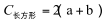
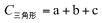
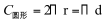
Under the current teaching model, the perimeter and area formulas for various shapes are taught separately in different grades, and students memorize a large number of isolated formulas. Examples include the perimeter formulas for common shapes (where a, b, and c represent side lengths, h represents height, and r represents the radius of a circle):
Csquare = 4a, Crectangle = 2(a + b), Ctriangle = a + b + c, Ccircle = 2πr = πd
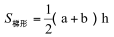
Another example is the area formulas for common shapes: Ssquare = a2, Srectangle = ab, Sparallelogram = ah, Striangle = ½ah, Strapezoid = ½(a + b)h, Scircle = πr2. Learning so many formulas across different grades means that students never achieve a unified, holistic understanding in their cognitive process—namely, the core idea that "perimeter is simply the length all the way around, and area is about 'equal-area transformation.'" This violates the principles of Cognitive Load Theory (CLT), increases extraneous cognitive load, and fails to help students build a hierarchical structure of "measurement" that runs from "lines" to "surfaces" and later even to "solids."
3.2 Case 2: Stage-Bound Concepts in Teaching "Linear Functions"
Under the current teaching model, middle school overemphasizes the "slope-intercept form" of linear functions (y = kx + b, k ≠ 0) without leaving any opening for continued study in high school. This can easily lead students to believe that the slope-intercept form is the most important, or even the only, form of the equation of a line, which plants a hidden cognitive problem for their study of analytic geometry in high school. Students have to go through a cognitive upheaval instead of a gradual deepening. This violates the principle of meaningful learning: the new knowledge (point-slope form) cannot form a substantive connection with the old knowledge (slope-intercept form). Even worse, it artificially severs the connection between the geometric meaning of a line and its algebraic expression. Only in high school do students learn that a "line" is "one fixed point" plus "one unchanging direction," and that there is no need to insist on expressing a so-called "intercept." Having to correct their understanding over and over makes students feel they are "learning too much" and "learning in scattered pieces." In this sense, it really is a case of "the more you learn, the worse you learn": knowledge that does not form a system can only trap students in the surface-level processing of "constantly updating their understanding."
3.3 Case 3: Terminology Barriers in "Rectangle," "Absolute Value," and "Modulus"
Under the current teaching model, the same concept is renamed as students move to a new stage. Meaningless changes in terminology, such as going from 长方形 (chángfāngxíng) to 矩形 (jǔxíng)—both of which mean "rectangle"—add to the memory burden for no reason. Concepts that are essentially the same are given different names, such as "absolute value" and "modulus," which are both distances, that is, both fall under the category of length. This completely obscures the inherent unity of mathematics and obstructs deep processing during learning. The current fragmented approach to teaching violates the basic principles of cognitive load theory, as represented by Sweller. Students' working memory capacity is limited, and inefficient instructional design needlessly increases extraneous cognitive load, crowding out the germane cognitive load resources that should be used to build schemas [3] and ultimately trapping students' learning in a predicament of "high input, low output."
IV. Recommendations
Based on the preceding analysis of the flaws in the "teaching" and "learning" of mathematics from a secondary school student's perspective, across the three core dimensions of temporal fragmentation, stage-bound concepts, and terminology barriers, this section aims to systematically build a theoretical framework and a practical pathway centered on the ideas of "integration through core ideas" and "forward-looking construction." By using a "backward compatible" learning model to build a learning system in which "old knowledge drives new knowledge," it seeks to fundamentally reduce students' extraneous cognitive load, help them escape the trap of fragmented learning, and guide them away from mechanical, surface-level memorization of "knowledge points" toward a deep understanding of the essence of mathematics, so that they can achieve efficient, sustainable deep learning.
4.1 Top-Level Restructuring: Organizing Teaching Content Around Core Ideas
The current textbook structure, arranged linearly by grade and by knowledge point, is the root cause of "one-year-and-done" learning and cognitive fragmentation. It artificially splits apart mathematical ideas that are inherently unified, leaving students unable to see the forest for the trees. Therefore, the first strategy is to start from top-level design and deeply reorganize teaching content: break down grade-level barriers and organize "thematic units" around core mathematical ideas. This means that learning from elementary school through secondary school should not strictly follow the order of the textbook chapters. Instead, the core mathematical ideas behind the knowledge—such as reduction (turning a new problem into a known one), equation-based thinking, combining numbers and shapes (connecting algebra with geometry), limits, and case analysis—should serve as the threads of learning, so that content scattered across different school stages but sharing the same root idea is integrated into logically coherent "thematic units." This reorganization is more than a simple piling up of knowledge; each unit centers on a core inquiry task and guides students through a complete process of mathematical rediscovery.
Below, the unit on "the area of polygons" is used as an example to illustrate the idea of reduction. The core task of this unit can be set as: "Explore how to measure unknown shapes by 'cutting and filling in' so as to reduce them to known shapes." Starting from the rectangle area formula that students already know, pose the core question: "How can we find the areas of plane figures we haven't studied yet, such as squares, parallelograms, triangles, and trapezoids?" We know that the area of a rectangle = length × width, and a square is just a rectangle with one adjustment—its length and width are equal—so there is no point in artificially defining its area formula as "side × side"; length × width still works. However, to build a better internal connection with solid geometry in high school, it would be better to replace the "length × width" of the rectangle with the same wording used for parallelograms, triangles, and trapezoids: "base" and "height."
Geometry—whether plane geometry or solid geometry—is ultimately all about playing with "height." Once you have the "height," you have everything. In plane geometry, the "height" lies flat: it is a line perpendicular to a line. In solid geometry, the "height" stands up: it is a line perpendicular to a plane. Rectangles and squares naturally have line-to-line perpendicularity, which means a "height" lying flat is already built into the figure. We might as well change the rectangle area formula to S(rectangle) = base × height, where the original length becomes the "base" in the formula and the original width becomes the "height." Likewise, a square still has natural line-to-line perpendicularity, so it naturally has a "base" and a "height"; the only difference is that its "base" and "height" are equal in length.
Now look at the parallelogram. Unfortunately, this figure no longer has a naturally occurring line-to-line perpendicular relationship. So the natural next step is to guide students to look for the most important element in geometry—the "height"—and then, through a sequence of drawing the height, cutting, and translating (sliding the piece over), to reduce the figure to a rectangle, so that they "discover" and derive the area formula S(parallelogram) = base × height on their own. The key is to find the "base" and the "height" and to understand the idea of reduction through "equal-area transformation."
In the same way, for finding the areas of more complex figures such as triangles and trapezoids, students are still guided to find the "base" and the "height"—that is, to find the line-to-line perpendicular relationship in the figure—and to use "cutting and filling in." By cutting and translating within known figures such as parallelograms, rectangles, or squares, they locate the triangle or trapezoid, which reduces the problem to finding the area of a known parallelogram, rectangle, or square, and they derive the area formula for a triangle or trapezoid: S = base × height ÷ 2. As for the (top base + bottom base) in the original trapezoid area formula, it is really still the "base" of the parallelogram or rectangle formed after cutting, filling in, and translating.
Throughout the process, the teacher is no longer someone who pours formulas into students, but a facilitator who guides student inquiry. The core idea teachers should keep emphasizing to students is: there is no new knowledge, only old content; the less you learn, the better you learn. It is all about finding the "base" and the "height"—and isn't that just the line-to-line perpendicular relationship learned in the lower grades? This not only solves the problem of a unified understanding of area calculation, but also trains the core thinking needed to solve mathematical problems and even problems in general. More importantly, it removes students' fear of "new knowledge" and their mental block against it.
In short, this thematic-unit approach takes formula derivations that were originally scattered over several semesters and learned in isolation and integrates them into a single inquiry journey with a clear goal, coherent logic, and a unified idea. What students gain is no longer a few isolated formulas, but the mathematical idea of reduction and an overall schema for calculating area. This greatly reduces their memory burden and improves their depth of understanding and their ability to transfer what they learn.
4.2 Forward-Looking Construction: Building in Logical Interfaces When a Concept Is First Introduced
As a high school student looking back on nearly ten years of learning mathematics, I have come to realize deeply that the way a concept is taught when it is first introduced directly determines how efficiently and how deeply later knowledge can be built on it. The core of forward-looking construction is to treat the knowledge of a subject as an organic whole and, at students' very first encounter with a concept, to build in standardized, extensible "logical interfaces," so as to avoid the repeated reconstruction or cognitive conflict caused by the separation of school stages. This idea is especially important in logically rigorous subjects such as mathematics, and putting it into practice depends on two strategies: "terminology first" and "essence first."
Terminology first: laying the foundation for academic language with lifelong terms. When a concept is first introduced, its standard, universal academic term should be used, rather than a simplified, stage-specific expression. For example, when elementary students learn about "a quadrilateral with four right angles," if the teacher only emphasizes the everyday name 长方形 (chángfāngxíng), students often have trouble understanding the classification relationship "a square is a special rectangle (矩形, jǔxíng)" once they reach middle school. If, instead, the standard term 矩形 is introduced at the very beginning, along with the explanation that a square is the special case in which adjacent sides are equal, a complete hierarchy of quadrilateral concepts can be built in advance. This approach is like presetting a standardized slot: later, when students study the properties of parallelograms, they will naturally understand the inclusion relationship between rectangles and squares and will avoid the common misconception that "a square is not a rectangle."
Similarly, if the middle school teaching of "absolute value" defines it only as "distance on the number line," its conceptual boundaries can easily be confined to the real numbers. I very much hope that when teachers explain "distance" in 7th grade, they will point out that this concept of "distance" will later be extended to the "modulus" of a complex number or the "modulus" (magnitude) of a vector, and that all three express the same essence: "measuring size." As a high school student, when I learned the formula for the modulus of a complex number, my early understanding of the essence of absolute value allowed me to quickly assimilate the new knowledge as an extension of the concept of "distance," which noticeably lowered my cognitive load.
Essence first: connecting the logic of a subject through core principles. At the very start of learning a method, teaching should go straight to its most universal principle, even if that principle seems a bit cumbersome in the application at hand. For example, in studying functions, if the teaching of linear functions begins with their geometric essence—"a line"—then the relationship between the point-slope form and the slope-intercept form, with one derived from the other, follows naturally. Teachers need to make clear that because the point-slope form needs only one point and one slope to determine a line, it is the universal method, while the slope-intercept form is merely a simplified expression for a special case. This kind of analysis of the essence allowed me, when I studied analytic geometry in high school, to actively work backward from geometric features to algebraic expressions instead of memorizing formulas mechanically.
This is shown most fully in building the conceptual system of quadrilaterals. Looking back on my own learning experience, the way textbooks introduce parallelograms, rectangles, rhombuses, and squares sometimes leads students to assume from the start that the "square" is an independent kind of figure. In my view, a more forward-looking order of introduction would take the parallelogram as the logical starting point and derive the special figures step by step through clear "restrictions on sides and angles." The parallelogram serves as the basic model, and its core definition is "both pairs of opposite sides are parallel."
The first "surgery"—restricting the "angles": Adding the condition "one angle is a right angle" to a parallelogram gives a rectangle. This lets students understand that a rectangle is a parallelogram that has "had angle surgery," so it naturally inherits the property that its diagonals bisect each other, while "the diagonals are equal in length" is a new property brought about by the right-angle restriction.
The second "surgery"—restricting the "sides": Adding the condition "one pair of adjacent sides is equal" to a parallelogram gives a rhombus. Students can reason that a rhombus is a parallelogram that has "had side surgery," so in addition to bisecting each other, its diagonals gain the property of being "perpendicular to each other."
Combined "surgery": When both surgeries are performed at the same time—that is, when restrictions are placed on both the angles and the sides—the result is a square. It is both a special rectangle and a special rhombus.
This "concept surgery" model turns scattered properties that would otherwise have to be memorized by rote into a logical story with causes and effects that can be derived. Students do not memorize that "the diagonals of a rectangle are equal"; they understand that "because a right angle was introduced, the diagonals are equal." They do not recite that "the diagonals of a rhombus are perpendicular"; they understand that "the symmetry created by the four equal sides makes the diagonals perpendicular." This greatly reduces the memory burden and develops rigorous logical reasoning. Once students understand that the square is the joint result of these two "surgeries," its many properties become a logical necessity rather than a confusing pile of rules.
V. Discussion and Conclusion
As a student who has personally gone through the entire process of learning mathematics from elementary school to high school, when I look back on my learning journey and reflect on the problems often discussed in mathematics education today—"temporal fragmentation, stage-bound concepts, and terminology barriers"—they truly resonate with me deeply. Our most direct experience as students in everyday learning is often that knowledge seems to work like an interrupted download that keeps having to resume: every semester "restarts" certain concepts instead of letting knowledge grow naturally. Through this study, I hope to systematically reveal the structural flaws in elementary mathematics education, and I have built a solution centered on "forward-looking concept construction." This model aims to transform students' learning experience from "constantly rebuilding understanding" into "continuously growing understanding," ultimately forming the "coding system" described by Bruner. Looking back from the perspective of a high school student, the concepts that had clear "logical interfaces" built in during middle school or even elementary school have indeed shown strong transferability in the more complex learning of high school.
As a student, I sincerely hope that mathematics education can go one step further in being "student-centered." The mathematics learning we long for is one in which we can clearly see the logical threads behind the knowledge and feel the harmony and beauty of mathematics as an organic whole, instead of getting lost among scattered knowledge points and endless drilling. We hope teachers will do more to guide us to discover and pose problems, encourage us to solve problems in different ways, and create more opportunities for collaboration and discussion. We also hope assessment can be more diverse—paying attention not only to whether the final answer is right or wrong, but also to our effort and progress in the thinking process, in methodological innovation, and in the application of knowledge.
In sum, as students living through high school, we earnestly hope that mathematics education can reveal, earlier on, its beauty as a logically rigorous and unified science, rather than as a series of fragmented formulas and techniques to be passively accepted. Only when mathematics is no longer a synonym for scores and exams, and instead opens a window through which we can observe and understand the world, can it truly spark our curiosity and desire to explore and benefit us for life. Forward-looking construction may serve as a lever for this transformation. It calls for a quiet "classroom revolution" whose core is a shift from "teaching knowledge" to "teaching thinking" and from being "subject-centered" to being "student-centered." Its far-reaching significance lies in cultivating lifelong learners who can adapt to the complexity of future society.
References
[1] Shi, N. (2018). Eighteen lectures on basic mathematical ideas [数学基本思想18讲]. Beijing Normal University Press.
[2] Zhang, D. (2009). Introduction to mathematics education [数学教育学导论]. Higher Education Press.
[3] Sweller, J. (1988). Cognitive load during problem solving: Effects on learning. Cognitive Science, 12(2), 257–285.
[4] Ausubel, D. P. (1968). Educational psychology: A cognitive view. Holt, Rinehart and Winston.
[5] Bruner, J. S. (1960). The process of education. Harvard University Press.
© 2026 Herong Bai. All rights reserved. Original independent manuscript; not published in a peer-reviewed journal.
打破学段壁垒,构建生长型认知结构:
论初等数学的体系化“教”与“学”的重要性
摘要:从一个中学生视角出发,深入剖析当前我国1-12年级初等数学教育中存在的结构性弊病:知识碎片化、概念阶段化、术语壁垒化。这些弊病导致学习周期长、效率低下,学生陷入“学-忘-再学”的恶性循环。传统的模块化、点状教学导致学生认知结构松散,难以形成可迁移的数学思维能力。本文基于建构主义与认知负荷理论,提出以“前瞻性概念建构”为核心的体系化解决方案。其核心论点是:数学教学应从顶层设计出发,在知识点的初次建构时,就为其长远发展预留“接口”,通过“一名终身”“概念类比”的原则,建立新旧知识间的非人为、实质性联系,构建可自然生长、“向下兼容”的认知体系,旨在将学生从机械记忆和题海战术中解放出来,通过降低认知负荷、促进知识迁移,最终实现深度学习与思维素养的全面提升。
关键词:初等数学;体系化学习;前瞻性建构;术语壁垒;概念教学;向下兼容
一、引言
当前中小学数学的“教”与“学”面临的核心困境在于,学生的巨大时间投入与最终的思维能力产出严重不匹配。诸多研究表明,其深层症结并非学生智力或努力不足,而在于教学体系的结构性设计缺陷(史宁中, 2018)[1]。学生很容易陷入“上课听讲-课后刷题-考试遗忘-再补习”的高强度、低效率的恶性循环,其知识体系呈“点”状分布,缺乏“线”的串联和“面”的支撑,这种碎片化状态极大地增加了工作记忆的负担,符合John Sweller提出的认知负荷理论中关于“外部认知负荷”过高的典型特征,挤占了用于概念理解和创新的“内部认知负荷”资源(Sweller, 1988)[3]。从而失去旧知识带动新知识的学习能力,应用迁移更是难上加难。本研究通过中学生视角深入剖析此困境,并将其归纳为时序碎片化、概念阶段化、术语壁垒化三个核心维度,旨在构建一个理论框架与实践路径,以“向下兼容”的学习模式构建“旧知识带动新知识”的学习体系,从根本上摆脱碎片化学习的困境,实现高效、可持续的深度学习。
• 二、问题分析与现状描述
• 当前数学教育体系中存在的一系列结构性问题,制约了学生的学习效能与认知发展。从学习者的切身经验来看,知识往往以割裂的形态呈现,缺乏系统性整合与长远规划,这不仅加重了认知负担,更阻碍了深层数学思维的形成。具体而言,以下三方面问题尤为突出:
一是时序碎片化:重复低效的“年抛式”学习。知识模块被人为按年级切割,导致学生年复一年学习同类知识却难窥全貌。例如,“周长与面积”的学习,从长方形、三角形、梯形到圆,历时数年,学习过程是一系列孤立的公式记忆,而非“度量”与“转化”的统一数学思想(张奠宙, 2009)[2],认知过程呈重复性浪费。此模式显著增加了学生的外部认知负荷(Sweller, 1988)[3],占用了用于深度理解的认知空间。
二是概念阶段化:缺乏前瞻的“短视性”定义。为适配学段认知水平,课本中提及的核心概念常被给予片面乃至误导性定义,致使后续的学习成为对前面已学习过知识的“否定与重建”,而非“深化与扩展”。例如,小学强调“最小数是0”,为负数学习埋下认知冲突;初中一次函数过度强调“截距式”,而在高中解析几何则需重塑“点斜式”的通法。此现象违背了奥苏泊尔有意义学习中“新旧知识建立非人为、实质性联系”的基本原则(Ausubel, 1968)[4]。
三是术语壁垒化:人为制造的知识隔阂。同一概念在不同学段名称各异,如“长方形”与“矩形”“绝对值”与“模”;同一思想在不同应用场景中缺乏统一阐释,如“距离”的概念。在无形中增加了学生的记忆负荷,并使其无法洞察数学内在的统一性与简洁性,误以为数学是繁杂知识的堆砌,与布鲁纳倡导的“掌握学科基本结构”教学观相悖(Bruner, 1960)[5]。
尤为值得注意的是,作为亲历者的高中生对此体验尤为深刻。访谈发现,高二学生普遍存在“知识碎片感”与“认知重构挫败感”。一名受访者表示:“脑海中的知识像散落各处的积木,需要时不知如何拼装。常感觉高中是在修正而非延续初中的理解。”这从学习主体视角印证了现行体系的弊端。
更为严峻的是,这种体系性弊端已引发广泛的社会性焦虑。对家长的访谈普遍反映,随着学段升高,学生数学学习呈现出“越学越晚,成绩越来越低,补课也不见效果”的困境。这种投入与产出的严重失衡,表明问题绝非通过“延长学习时间”“增加练习强度”等增量方式所能解决,其根源在于知识结构与认知模式的本身。家长群体的普遍困惑与无力感,从教育生态的外部视角,进一步强化了进行体系化深层改革的紧迫性与必要性。
三、 案例分析与问题诊断
3.1 案例一:“周长”与“面积”学习中的时序碎片化
现行的教学模式是各种图形周长与面积公式分散于不同年级教授,学生记忆的是大量的孤立的公式,如各种常见图形的周长公式(a、b、c代表边长,h代表高,r代表圆的半径):
,,,
再如各种常见图形的面积公式:,,,,,。如此多的公式分年级学习,导致在学生的认知过程中并未实现统一的整体认知,即“周长就是一周的长度,面积就是‘等积变换’”的核心思想。这违背了Cognitive Load Theory, CLT)的原则,增加了外部认知负荷,且未能帮助学生构建关于“线”“面”甚至后期的“体”的“度量”层次结构。
3.2 案例二:“一次函数”教学中的概念阶段化
现行的教学模式是,在初中阶段过度强调“一次函数”的“截距式”(),而此时并没有预留高中阶段继续学习的切口,很容易让学生认为截距式是最重要的甚至是唯一的直线方程形式,为学生在高中阶段的解析几何学习埋下认知上的隐患。学生需经历认知上颠覆,而非渐进深化。这违反了有意义学习原则,新知(点斜式)无法与旧知(截距式)建立实质性联系。更严重的是人为割裂了直线几何意义与代数表达的联系。到了高中才知道,所谓“直线”是“一个定点”+“一个不变的方向”,而并不是非要表示出一个所谓的“截距”,这种认知上的反复更正,会让学生觉得“学得多”“学得散”。从这种意义上来说,确实是“学得越多、学得越差”,知识不成体系,只能使学生陷入“不断更新认知”的表层处理。
3.3 案例三:“矩形/绝对值/模”中的术语壁垒化
现行的教学模式是同一概念随着学段更名。没有意义的术语转换,如“长方形”至“矩形”,无故增加记忆负担;本质统一的概念采用不同名称,如“绝对值”与“模”,都是距离,即长度的范围,彻底遮蔽了数学的内在统一性,阻碍了学习过程中的深层处理。当前碎片化的教学方式,违背了以Sweller为代表的认知负荷理论的基本原则。学生的工作记忆容量有限,低效的教学设计会徒增外部认知负荷,从而挤占了本应用于构建图式的相关认知负荷资源[3],终导致学生的学习陷入了‘高投入、低产出’的困境。
四、对策建议
基于前述对中学生视角中数学“教”与“学”存在的时序碎片化、概念阶段化及术语壁垒化等三个核心维度上弊病的剖析,本章旨在系统性地构建一个理论框架与一套以“核心思想统整”与“前瞻性建构”为核心理念的实践路径。以“向下兼容”的学习模式构建“旧知识带动新知识”的学习体系,从根本上降低学生的外部认知负荷,摆脱碎片化学习的困境,引导其从机械、表层的“知识点”记忆转向对数学本质的深度理解,实现高效、可持续的深度学习。
4.1 顶层重构:以核心思想组织教学内容
当前按年级、知识点线性排列的教材结构,是造成“年抛式”学习和认知碎片化的根源。它人为地割裂了具有内在统一性的数学思想,使学生的学习陷入“见木不见林”的困境。因此,首要策略是从顶层设计入手,进行教学内容的深度重组。打破年级壁垒,按核心数学思想组织“主题单元”,这意味着从小学到中学的学习不应该严格遵循教材的章节顺序,而是以蕴含在知识背后的核心数学思想,如化归思想、方程思想、数形结合、极限思想、分类讨论等为学习线索,将分散在不同学段的、具有共同思想根源的内容整合为一个个富有逻辑连贯性的“主题单元”。这种重组并非知识的简单堆砌,而是围绕一个核心探究任务,引导学生经历完整的数学再发现过程。
下面,以“多边形的面积”单元的学习为例,阐释“化归”思想。该单元的核心任务可设定为:“探索如何通过‘割补化归’将未知图形转化为已知图形进行度量”。从学生已知的矩形面积公式出发,提出核心问题:“我们如何解决像正方形、平行四边形、三角形、梯形这些我们不曾学过的平面几何图形的面积求解问题?”已知,矩形面积=长×宽,而正方形只是在矩形的基础上做了一下调整,长与宽等长,那么其面积公式根本没有意义人为定义成“边长×边长”,依旧是长×宽即可。但是为了可以和高中阶段的立体几何建立更好的内在联系,不如把矩形中提到的长×宽,统一成与平行四边形、三角形、梯形一样的说法:“底”与“高”。
几何的学习,无论是平面几何还是立体几何,说到底是在玩“高”,有“高”有一切。平面几何中,是躺着的“高”,线与线的垂直状态;立体几何中,是竖起来的“高”,线与面的垂直状态。矩形与正方形中具有天然的线与线的垂直条件,即图形中天然存在躺着的“高”,不妨将矩形的面积公式改为:S矩形=底×高,其原来的长,即公式中的“底”,原来的宽,即公式中的“高”。同理,在正方形中,依旧有天然的“线”与“线”的垂直,即有天然的“底”和“高”,只是“底”和“高”等长。
再来看平行四边形,很遗憾该图形中没有了天然存在的“线”与“线”的垂直关系,那下一步理所当然地可以引导学生去找几何中最重要的元素——“高”,进而完成通过画高、剪切、平移,将其化归为一个矩形的一系列,从而自主“发现”并推导出面积公式S 平行四边形=底×高。重点在于找到“底”和“高”,理解“等积变形”的化归思想。
同理,三角形、梯形等复杂图形的面积求解问题,依旧引导学生找到“底”和“高”,找到图形中的“线”与“线”的垂直关系,用“割与补”的方式,在已知图形平行四边形、矩形或者正方形中通过切割、平移等操作找到三角形、梯形,从而将其化归为已知的平行四边形、矩形或正方形面积问题,推导出公式三角形或梯形的面积公式S= 底×高÷2,而梯形原有的面积公式中的(上底+下底),其实依旧是割补、平移后的平行四边形或矩形的“底”。
在整个过程中,老师的角色不再是公式的灌输者,而是引导学生探究的 facilitator。给学生不断强调的核心思想应该是:没有新知识,只要旧内容;学得越少、学得越好,就是找到“底”和“高”,不就是低年级学过的“线”与“线”之间的垂直关系吗?这样不仅解决了面积计算的统一认知问题,还训练了解决数学问题乃至一般性问题的核心思维,更重要的是消除了学生心中对“新知识”的恐惧和障碍。
综上,这种主题单元式教学,将原本分散在数个学期、孤立学习的公式推导,整合为一个目标明确、逻辑连贯、思想统一的探究旅程。学生收获的将不再是几个孤立的公式,而是一套数学化归思想和一个关于面积计算的整体图式,极大地减轻了学生的记忆负担,提升了理解深度和迁移能力。
4.2 前瞻建构:在概念初建时预留逻辑接口
作为高中生,回顾近十年的数学学习历程,深刻体会到概念初建时的教学引导方式,直接决定了后续知识体系的构建效率与深度。前瞻建构的核心在于,将学科知识视为有机整体,在首次接触概念时即预留标准化、可扩展的“逻辑接口”,避免因学段割裂导致重复建构或认知冲突。这种理念在数学等逻辑严密学科中尤为重要,其实现依赖于“术语前置”与“本质先行”两大策略。
术语前置:以终身术语奠定学术语言基础。在概念引入初期即采用其标准、通用的学术术语,而非阶段性简化表述。例如,小学学习“四个角都是直角的四边形”时,若教师仅强调“长方形”这一生活化名称,学生进入中学后常难以理解“正方形是特殊矩形”的分类关系。相反,若在初始阶段即同步引入“矩形”这一标准术语,并说明正方形是邻边相等的特殊情形,可提前构建完整的四边形概念层级。这种处理像是预设标准化的插槽,未来学习平行四边形性质时,学生能自然理解矩形与正方形的包含关系,避免“正方形不是矩形”的常见误区。
类似地,初中“绝对值”教学若仅定义为“数轴上的距离”,其认知边界易被局限在实数范畴。非常希望教师在初一讲解“距离”的时候就能指出:这一“距离”概念在未来将拓展为复数的“模”或向量的“模”,三者均表征“大小度量”的本质。作为高中生,我在学习复数模长公式时,因早期对绝对值本质的理解,迅速可以将新知识同化为“距离”概念的推广,显著降低了认知负荷。
本质先行:以核心原理贯通学科逻辑。在方法学习初期应直指其最普适的原理,即使该原理在当下应用中略显繁琐。例如,在函数学习中,一次函数的教学若从其几何本质“直线”切入,可自然引出点斜式与截距式的派生关系。教师需明确:点斜式因仅需一点一斜率即可确定直线,是普适性方法;截距式仅是特殊情形下的简化表达。这种本质剖析,使我在高中学习解析几何时,能主动从几何特征反推代数表达式,而非机械记忆公式。
这一点在四边形概念体系的建构中展现得淋漓尽致。回顾我的学习经历,教材对平行四边形、矩形、菱形、正方形的引入,有时会让学生先入为主地认为“正方形”是一种独立的图形。个人认为一个更具前瞻性的引入顺序,是以平行四边形为逻辑起点,通过清晰的“边与角的要素限制”来逐级派生特殊图形:平行四边形作为基础模型,其核心定义是“两组对边分别平行”。
第一次“手术”——对“角”进行限制:在平行四边形基础上,增加“一个角为直角”的条件,便得到矩形。这可以让学生理解,矩形是“做过角手术”的平行四边形,因此它自然继承了对角线互相平分的性质,而“对角线相等”则是直角限制带来的新特性。
第二次“手术”——对“边”进行限制:在平行四边形基础上,增加“一组邻边相等”的条件,便得到菱形。学生可以推理,菱形是“做过边手术”的平行四边形,因而其对角线在平分之外,还增加了“互相垂直”的性质。
联合“手术”:当上述两次手术同时进行,即在对角和边同时施加限制,得到的就是正方形——它既是特殊的矩形,也是特殊的菱形。
这种基于“概念手术”的模型,将原本需要机械记忆的零散性质,转化为一个有因果、可推导的逻辑故事。学生不是记忆“矩形对角线相等”,而是理解“因为引入了直角,所以对角线相等”;不是背诵“菱形对角线垂直”,而是明白“因为四边相等带来的对称性,导致对角线垂直”。这极大地减轻了记忆负担,并培养了严谨的逻辑推理能力。当学生理解正方形是这两个“手术”的共同结果时,其丰富的性质便成了逻辑的必然,而不再是一堆令人困惑的条文。
五、讨论与结论
作为一名亲身经历了小学到高中数学学习全过程的学生,当我回顾自己的学习历程,再反思当前数学教育中常被讨论的“时序碎片化、概念阶段化、术语壁垒化”等问题,确实有很深的感触。我们学生在日常学习中最直接的感受,常常是知识似乎总在“断点续传”——每个学期都在“重启”某些概念,而不是让知识自然生长。希望通过本研究系统地揭示初等数学教育中存在的结构性弊病,并构建了一个以“前瞻性概念建构”为核心的解决方案。该模型旨在将学生的学习体验从“不断重构认知”转变为“持续生长认知”,最终形成布鲁纳所描述的“编码系统”。从一名高中生的视角回望,那些在初中甚至小学阶段就被植入了清晰“逻辑接口”的概念,在高中更为复杂的学习中确实展现了强大的迁移性。
作为一名学生,我深切期待数学教育能够更进一步地“以生为本”。我们渴望的数学学习,是能够清晰地看到知识背后的逻辑脉络,感受数学作为一个有机整体的和谐与美,而不是在零散的知识点和无休止的刷题中迷失方向。我们期待老师能更多地引导我们发现和提出问题,鼓励我们用不同的思路解决问题,并创造更多合作交流的机会。我们也希望评价方式能更多元,不仅关注最终答案的对错,也能看到我们在思考过程、方法创新和知识应用方面的努力与进步。
总而言之,作为高中学习的亲历者,我们深切期盼数学教育能更早地展现其作为逻辑严密的整体科学之美,而非一系列需要被动接受的碎片化公式与技巧。当数学不再是分数和考试的代名词,而是为我们打开一扇观察世界、理解世界的窗户时,它才能真正激发我们的好奇心与探索欲,并让我们受益终身。前瞻建构或可成为撬动这场变革的一个支点。它呼吁一场静悄悄的“课堂革命”,其核心是从“教知识”转向“教思维”,从“学科中心”转向“学生中心”,其深远意义在于培养能够适应未来社会复杂性的终身学习者。
参考文献
[1] 史宁中. (2018). 数学基本思想18讲.北京师范大学出版社.
[2] 张奠宙. (2009). 数学教育学导论. 高等教育出版社.
[3] Sweller, J. (1988). Cognitive load during problem solving: Effects on learning. Cognitive Science, 12(2), 257-285.
[4] Ausubel, D. P. (1968). Educational psychology: A cognitive view. Holt, Rinehart and Winston.
[5] Bruner, J. S. (1960). The process of education. Harvard University Press.